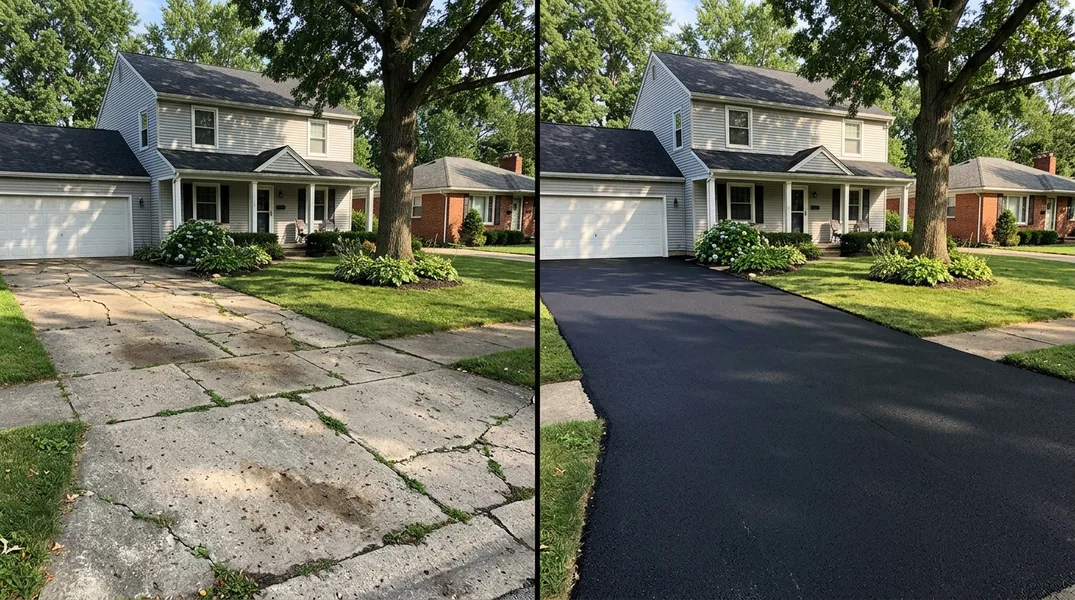
Understanding Cleveland's Unique Soil Challenge
Cleveland sits on the Lake Plain, a geological region dominated by dense clay soils left behind by glacial activity thousands of years ago. This clay composition is the root cause of a problem that plagues homeowners every spring: catastrophic driveway damage. Unlike sandy or well-draining soils found in other regions, Lake Plain clay retains moisture exceptionally well, and when winter temperatures drop below freezing, that moisture turns to ice.
When water freezes, it expands approximately 9 percent in volume. In clay-heavy soil, this expansion has nowhere to go but up, pushing your driveway with tremendous force. This phenomenon, called frost heave, is responsible for the cracked, buckled, and sunken driveways you see throughout the region every March and April. Homeowners in Lakewood, Parma, and Cleveland Heights face the same seasonal battle against their soil composition. Understanding this geological reality is the first step toward choosing the right solution for your property.
How Frost Heave Damages Your Asphalt Driveway
Frost heave doesn't just create minor cracks. The upward pressure from expanding frozen soil can lift sections of asphalt several inches, creating dramatic peaks and valleys across your driveway surface. When spring arrives and the soil thaws, the ground settles unevenly, leaving your asphalt unsupported in some areas. This uneven settling creates stress points where the asphalt bends and flexes beyond its structural limits, leading to alligator cracking, edge separation, and the formation of potholes.
The damage accelerates once water penetrates the cracks. Rainwater seeps beneath the asphalt surface, weakening the base layers and subgrade. Over multiple freeze-thaw cycles, these weakened areas expand and contract, deepening cracks and enlarging potholes. By mid-spring, many Cleveland homeowners discover that their driveway has transformed from a minor inconvenience into a serious structural problem requiring immediate attention. The longer you wait to address frost heave damage, the more expensive your eventual repair becomes.
Spring Inspection: Identifying Frost Heave Damage
The best time to assess frost heave damage on your driveway is in early spring, right after the last freeze-thaw cycle. Look for distinctive patterns that indicate frost heave rather than standard wear and tear. Localized buckling or raised sections, linear cracks that run perpendicular to your driveway's length, and areas where the asphalt surface appears to have shifted are all classic frost heave signatures. You may also notice that damage appears in the same spots year after year, which confirms that soil conditions beneath those areas are particularly susceptible to frost action.
Pay special attention to the edges of your driveway and areas near downspouts or drainage problems, as these spots tend to retain more moisture and experience more severe frost heave. If you see potholes forming or existing cracks widening, Driveway Repair should be your priority. Small problems caught early are far more cost-effective to address than waiting until your entire driveway requires replacement. If you're uncertain about the extent of damage or the best course of action, Cleveland Asphalt Paving can provide a professional assessment at no cost. Call us at (216) 238-3742 to schedule your spring driveway inspection.
Pothole Repair and Asphalt Patching: Short-Term Solutions
Pothole Repair & Asphalt Patching can extend your driveway's life by several years if the damage is localized to specific areas. For driveways with frost heave damage limited to a few potholes or isolated cracks, patching is a practical and affordable option. Professional patching involves cleaning out the damaged area, applying a bonding agent, and filling the hole with quality hot-mix asphalt that's compacted to match the surrounding surface. When done correctly, a patched pothole can remain stable for three to five years, depending on soil conditions and weather exposure.
However, patching is not a permanent solution for frost heave damage, especially in Cleveland's climate. Since the underlying soil conditions remain unchanged, frost heave will likely recur in the same areas during future winters. If your driveway shows multiple potholes, widespread cracking, or evidence of repeated damage in the same spots, patching becomes a temporary band-aid rather than a lasting fix. At some point, you'll need to make a larger investment in either a complete asphalt overlay or full replacement to address the root cause of the problem.
Repair or Replace Asphalt Driveway: Making the Right Decision
The decision to repair or replace your driveway depends on several factors, including the extent of frost heave damage, the age of your current asphalt, and your long-term plans for your property. If your driveway is less than ten years old and frost heave damage is limited to specific areas, Asphalt Resurfacing & Overlay may be the most cost-effective solution. An overlay involves applying a new layer of asphalt over your existing surface, effectively resetting the clock on your driveway's lifespan while addressing visible damage.
If your driveway is older than fifteen years, shows widespread cracking across multiple areas, or has experienced repeated frost heave damage despite previous repairs, full replacement is typically the better long-term investment. A complete replacement allows contractors to address underlying drainage and soil preparation issues that contribute to frost heave. While the upfront cost is higher, a properly installed new driveway will outperform a series of repairs and patches over the next ten to fifteen years. The key is evaluating your specific situation based on damage severity, driveway age, and budget. Cleveland Asphalt Paving specializes in helping homeowners navigate this decision. Request a free estimate today to compare your options and understand the true cost of repair versus replacement for your property.
Preventing Future Frost Heave Damage
While you cannot change Cleveland's clay-based soil composition, you can take steps to minimize frost heave damage on future driveways or newly repaired surfaces. Proper drainage is the single most important factor in reducing frost heave severity. Ensure that water drains away from your driveway rather than pooling or running toward it. Install or maintain gutters and downspouts that direct roof water at least five feet away from your driveway edge. Grade your landscaping so surface water slopes away from the pavement, and consider installing a perimeter drain if water consistently pools near your driveway.
When you invest in Asphalt Driveway Paving & Installation, work with a contractor who understands Cleveland's climate and soil challenges. Proper base preparation, including adequate compaction and quality gravel base layers, helps distribute frost heave forces more evenly and reduces the severity of damage. Some contractors in the area also recommend installing a geotextile membrane or permeable base layer designed to manage moisture and reduce frost heave intensity. These preventive measures add to your initial investment but can significantly extend your driveway's lifespan in our challenging climate. Cleveland Asphalt Paving has decades of experience building driveways that withstand Lake Plain frost heave. Contact us at (216) 238-3742 to discuss best practices for your next paving project.
Looking for a professional asphalt paving contractor in Cleveland? Cleveland Asphalt Paving responds fast for all your asphalt paving needs.
Get a Free Quote