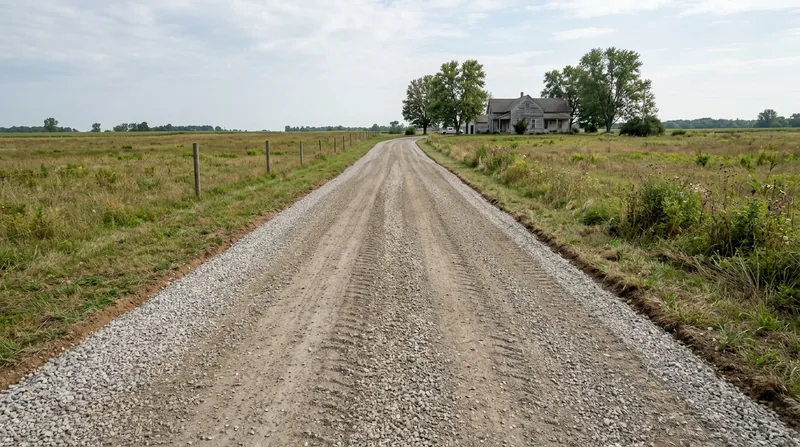




Gravel driveway installation and grading in Cleveland demands more than dumping stone on clay. The lake-plain soils and glacial till underneath most of Greater Cleveland's outer neighborhoods shed water poorly, and without proper grading and compaction, a gravel drive becomes a mud pit after the first heavy rain. We grade the subgrade, crown the surface for drainage, add compacted stone in the right depth, and build a drive that sheds water instead of pooling it. The difference between a gravel drive that holds and one that ruts and floods is the foundation work underneath, and that's where the expertise lives.
Gravel driveways work well in Cleveland's townships and rural edges, where the lot sizes are larger and the traffic is lighter. But they need to be built right for our climate. With a 42-inch design frost depth and freeze-thaw cycles that run through the winter under lake-effect snow, the subgrade has to be prepared, the stone has to be the right size and depth, and the crown has to shed water reliably. We've been building gravel drives across Cuyahoga, Lake, and Summit counties since 2010, and we understand the soil and the weather that will test it. If you're looking for recycled asphalt millings as an alternative, we can discuss that too, but the grading principle is the same: surface must slope, base must compact, and water must move.
Why Gravel Driveway Grading Matters in Cleveland's Outer Neighborhoods
The problem with gravel driveways in Cleveland isn't the gravel itself, it's what lives underneath. The clay and silt of the lake plain, and the dense glacial till on the higher ground, don't drain. Water sits on the subgrade, frost heaves it, and the whole surface shifts and ruts. A properly graded and crowned gravel drive sheds that water before it pools, and compacted stone base holds the surface stable through the freeze-thaw cycle. Grading isn't optional in this climate; it's the difference between a drive that lasts five years and one that turns into a washboard by spring.
- We remove or scarify the existing surface if there is one, and expose the subgrade so we can see what we're working with.
- We grade and slope the subgrade to shed water away from structures and low spots, typically a 2 to 4 percent crown from center to edge.
- We proof-roll or compact the prepared base with a vibratory roller so it can't settle after the stone goes down.
- We add compacted stone in the right depth, typically 4 to 6 inches of crushed limestone or similar, in lifts, with rolling between lifts.
- We establish proper drainage at the drive edges and apron so water runs off the drive, not into the yard or foundation.
A gravel drive built this way will hold up through Cleveland winters and won't become a muddy rut after the first rain.
Local example: A 24-foot-wide, 60-foot-long gravel drive in Parma or Strongsville sits on clay that heaves. Without grading, it becomes corrugated by March. With proper crown and compacted base, it stays flat and drains. We've rebuilt dozens of these drives across the outer ring suburbs where the lots are bigger and gravel still makes sense.
How We Install and Grade Gravel Driveways in Cleveland: Step by Step
Our process starts with understanding the site. We look at the slope of the land, where water naturally flows, where it pools, and what the existing subgrade looks like. We then remove any old material, grade the base, compact it, and add stone in layers. The crown is critical, and so is the edge detail. We don't just spread stone; we build a drive that will shed water for years.
- We measure the area and assess the existing subgrade, drainage patterns, and any soft or wet spots that need attention.
- We remove old surface material if present, and scarify or grade the subgrade to expose a stable bearing layer.
- We establish the crown and slope with grading equipment, typically 2 to 4 percent pitch from center to edge or toward a natural drainage path.
- We compact the prepared subgrade with a vibratory roller, making multiple passes until it's firm and won't settle.
- We add and compact stone in layers, starting with larger aggregate at the base and finishing with smaller stone on top for a stable, compacted surface.
- We establish edge and apron drainage so water sheds off the drive and doesn't pond at the edges or against structures.
The job typically takes one to three days depending on the size and the condition of the subgrade. We work with written measurements and tonnage specs so you know exactly what's going in and why.
Cleveland example: A 300-foot gravel lane serving two homes in Mentor or Elyria needs proper crown and compacted base. We grade it, add 40 to 50 tons of stone in two lifts, compact it, and establish swales at the edges. The homeowners get a written estimate with tonnage, and the drive stays stable and drains properly through the winter.
If you're considering asphalt paving as a longer-term alternative, the grading work we do for gravel is the same foundation we'd use for asphalt, so it's not wasted effort.
Gravel Driveway Methods: When to Use Stone, Recycled Asphalt, or Millings
| Material | Description | Best for |
|---|---|---|
| Crushed limestone or gravel | Angular stone, typically 3/4 inch to dust, compacts well and sheds water. Stable over multiple seasons. | Long-term gravel drives in residential areas where stone durability and low maintenance matter. |
| Recycled asphalt millings | Reclaimed asphalt pieces that compact and re-bond in warm weather. Lower cost than new stone. Requires re-raking in spring. | Budget-conscious homeowners or temporary/seasonal drives. Works well on proper graded base in Cleveland climate. |
| Marble chips or decorative stone | Aesthetic finish stone, typically laid over a crushed stone base. Doesn't compact as firmly as angular aggregate. | Aesthetic upgrade on already-stable graded base. Requires solid foundation underneath to prevent rutting. |
| Tar and chip (chip seal) | Liquid asphalt binder sprayed on stone, creating a semi-bound surface. More stable than loose gravel, less cost than full asphalt. | Homeowners wanting durability between gravel and asphalt. Requires proper base grading and compaction to succeed. |
The right choice depends on budget, expected traffic, and how long you want to go between maintenance visits. All methods require a properly graded and compacted base, which is where the real work happens.
Gravel Driveway Installation and Grading Cost in Cleveland: What to Expect
A gravel driveway installation starts at around $950 for a small residential drive, typically 12 to 16 feet wide and 30 to 40 feet long, with basic grading and stone. The cost moves up based on the size of the drive, the condition of the subgrade, how much excavation or fill is needed, and the type of stone you choose. A longer lane serving multiple properties, or a drive that needs significant grading to correct drainage problems, will cost more. We provide written estimates with measurements and tonnage so you understand what you're paying for and why.
Factors that affect cost include the width and length of the drive, the depth of stone required, the condition of the subgrade (soft or wet soil costs more to prepare), whether fill material is needed, and the type of stone you select. A drive that needs significant grading, fill, or drainage work will be on the higher end. A straightforward drive on reasonably stable ground will be closer to the starting price. We recommend getting two or three estimates so you can compare scope and price, and we're happy to explain why our estimate says what it says.
Travel is included in our pricing across Cleveland and the surrounding areas. There's no separate mileage charge or call-out fee. The estimate is free and comes within 24 hours of your call to (216) 238-3742, and there's no obligation to book. For detailed pricing on your specific drive, visit our pricing page or call us with photos and measurements.
What to Look for When Hiring a Gravel Driveway Contractor Near Me in Cleveland
A good gravel driveway contractor is local, shows up with a written estimate, and explains the grading and compaction work in detail. You want someone who understands Cleveland's soil and climate, not a traveling crew that shows up once and disappears. Ask for references, check that they're fully insured, and verify that they understand drainage and base preparation. If your drive is in an HOA community, confirm that gravel is permitted under your architectural rules before you book. Some villages also require permits for driveway work or apron changes, so it's worth a quick call to your local building department.
- Ask for written estimates with measurements and tonnage so you know exactly what material is going in and how deep.
- Verify that the contractor is fully insured and can provide a certificate of insurance before work begins.
- Check references from recent jobs in your area, and ask to see a completed drive if possible.
- Confirm that gravel is permitted in your neighborhood, especially if you're in an HOA or a village with driveway standards.
- Ask whether a permit is required from your local building department for the work, and understand who handles it.
- Look for a contractor who explains the grading and compaction process and why it matters for Cleveland's climate and soil.
- Avoid contractors who demand a large cash deposit upfront or offer a price that seems too good to be true.
Cleveland Asphalt Paving has been serving the area since 2010. We're local, we carry full insurance, and we provide free estimates with no obligation. Call us at (216) 238-3742 or fill out a contact form to schedule a site visit.
Gravel Driveway Installation & Grading in Cleveland: Pricing Guide
| Service | Price | Details |
|---|---|---|
| Small residential gravel drive (12-16 ft wide, 30-40 ft long) | Starting at $950 | Basic grading, compacted base, and crushed stone. Cost increases with subgrade preparation and fill material needed. |
| Medium residential drive or short lane (16-24 ft wide, 40-80 ft long) | Starting at $1,400 | Grading, crown, compacted base, stone in layers, and edge drainage. Larger drives need more material and compaction time. |
| Long lane or multi-property drive (300+ linear feet, significant grading) | Starting at $2,500 | Extensive grading, fill, swales, multiple stone lifts, and drainage. Cost depends on subgrade condition and access for equipment. |
| Recycled asphalt millings or chip seal upgrade | Starting at $750 | Applied over properly graded and compacted base. Lower cost than crushed stone but requires annual maintenance and re-raking. |
| Travel and estimate | Included | No mileage fee or call-out charge across Cleveland and surrounding Cuyahoga, Lake, and Summit counties. |
| Free written estimate | No charge | Response within 24 hours at (216) 238-3742. Includes measurements, tonnage, and scope explanation. No obligation to book. |
Indicative pricing, the exact cost depends on square footage, finish, and site access. Free personalized estimate within 24h at (216) 238-3742.


