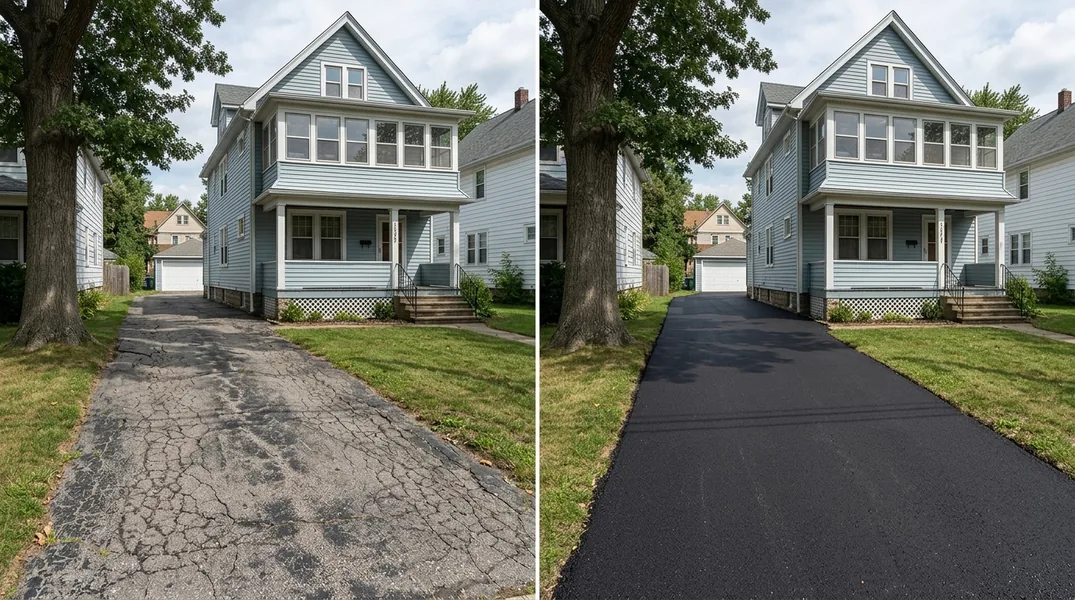
Understanding Freeze-Thaw Damage in Cleveland Winters
If you own a driveway in Cleveland, you know that winter brings more than just snow and cold temperatures. The region's freeze-thaw cycle is one of the most damaging natural forces your asphalt will face each year. This cycle occurs when water seeps into small cracks in your pavement, freezes when temperatures drop, and then expands as it thaws. That expansion creates pressure that widens existing cracks and eventually breaks apart the asphalt structure itself.
The problem is particularly acute in Cleveland because our winters feature rapid temperature fluctuations. A day might start at 35 degrees Fahrenheit and drop to 15 degrees by evening, only to climb back above freezing the next afternoon. This constant cycling of freezing and thawing puts enormous stress on your driveway's surface and underlying layers. Unlike regions with consistently cold winters, where the ground stays frozen solid, our variable temperatures create the perfect conditions for water infiltration and expansion damage that compounds season after season.
How Water Infiltration Leads to Major Driveway Problems
Water is the enemy of asphalt longevity, and freeze-thaw damage is essentially water doing its destructive work over time. When rain or melting snow finds its way into small cracks in your driveway, it settles beneath the surface. If that water freezes, it expands with tremendous force. A single cycle of freezing and thawing might not cause visible damage, but after dozens of cycles throughout a Cleveland winter, the cumulative effect becomes impossible to ignore.
The damage doesn't stop at the surface, either. Water that penetrates through cracks reaches the base layers of your driveway, weakening the foundation that supports the asphalt. This leads to a cascade of problems: cracks grow wider, potholes develop, and the entire structural integrity of your pavement becomes compromised. What started as a hairline crack in October can become a gaping hole by March. This is why catching and sealing small cracks early is so important. A small investment in preventative maintenance now can save you thousands in Driveway Repair costs later.
Recognizing Freeze-Thaw Damage: What to Look For
The signs of freeze-thaw damage on your driveway are usually unmistakable once you know what to look for. The most common indicator is alligator cracking, a pattern of interconnected cracks that resembles the scales on an alligator's skin. These cracks don't appear overnight; they develop gradually as the freeze-thaw cycle weakens the asphalt. You might also notice spalling, where chunks of asphalt break away from the surface, or potholes that seem to appear suddenly after a particularly harsh freeze.
Another telltale sign is edge cracking, where the outer edges of your driveway begin to crack and crumble. This happens because the edges are more exposed to temperature changes and moisture infiltration than the center of the driveway. If you notice any of these conditions, it's time to call a professional. Ignoring freeze-thaw damage only allows it to worsen, and what could have been addressed with Pothole Repair & Asphalt Patching might eventually require a complete driveway replacement.
Protecting Your Driveway: Prevention and Professional Solutions
The best defense against freeze-thaw damage is a proactive maintenance strategy. Seal coating your driveway every two to three years creates a protective barrier that prevents water from seeping into cracks and reaching the base layers. This simple preventative measure can extend the life of your driveway by years and save you from expensive repairs down the road. Additionally, keeping your driveway clean and free of debris allows water to drain properly rather than pooling in low spots where it can freeze and thaw repeatedly.
For driveways that have already suffered significant freeze-thaw damage, Asphalt Resurfacing & Overlay is often an excellent solution. This process removes the damaged top layer and applies a fresh asphalt surface, giving your driveway a new lease on life without the cost of complete replacement. If damage is more extensive, professional Asphalt Driveway Paving & Installation may be necessary to ensure your driveway can withstand future freeze-thaw cycles. The key is addressing damage before it becomes catastrophic.
Choosing the Right Paving Contractor: Questions to Ask
When you're ready to address freeze-thaw damage on your driveway, selecting the right contractor is crucial. Unfortunately, the asphalt paving industry has its share of unscrupulous operators. One common scam involves contractors using leftover asphalt from other jobs at cut-rate prices. While this might seem like a bargain, leftover asphalt is often lower quality, improperly mixed, or contaminated, and it won't provide the durability your driveway needs to withstand Cleveland winters. This is one of the most prevalent driveway paving scams, and it's worth understanding how to spot it.
Before hiring any contractor, ask specific questions about the materials they'll use, their experience with freeze-thaw damage in the Cleveland area, and whether they offer any warranty on their work. Request references from previous customers and verify that the company is properly fully insured. Ask about their approach to preventing future freeze-thaw damage and whether they recommend seal coating as part of their service. A reputable contractor will be transparent about their materials, methods, and pricing. Cleveland Asphalt Paving has been serving homeowners throughout the region with honest, professional service. If you'd like to discuss your driveway's condition and get a free estimate, call us at (216) 238-3742 or visit our website to schedule a consultation.
Understanding Paving Contractor Pricing: What Fair Costs Look Like
Understanding fair pricing for asphalt work helps you avoid both scams and unrealistic expectations. The cost of addressing freeze-thaw damage varies based on the extent of the damage, the size of your driveway, and the solution you choose. A simple seal coating to prevent future damage costs far less than pothole repairs or resurfacing, which costs less than a complete replacement. When comparing quotes from different contractors, be wary of prices that seem too good to be true. Extremely low bids often indicate the use of substandard materials or poor workmanship, which will cost you more in the long run.
Reputable contractors will provide detailed written estimates that break down material costs, labor, and any additional services. They should be able to explain why their pricing is what it is and what you can expect in terms of durability and longevity. If a contractor pushes high-pressure sales tactics or refuses to provide a written estimate, that's a red flag. A trustworthy company like Cleveland Asphalt Paving will take time to assess your specific situation and provide honest recommendations based on your driveway's actual needs, not just what generates the biggest sale. Contact us today at (216) 238-3742 to discuss your driveway's needs and get a transparent estimate for the work required.
Looking for a professional asphalt paving contractor in Cleveland? Cleveland Asphalt Paving responds fast for all your asphalt paving needs.
Get a Free Quote